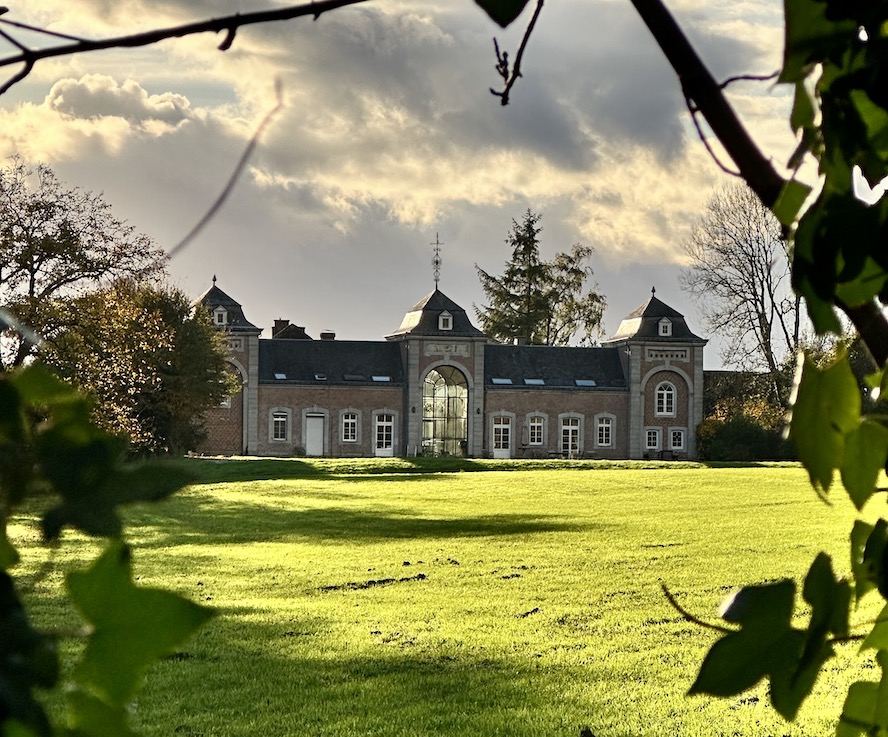
Built in limestone between the seventeenth and nineteenth centuries, Bassines carries a long lineage woven through the stones, forests, and surrounding hills of the Condroz.
For centuries this small hamlet stood on a quiet slope as a meeting point between families, lands, and eras, shaped by those who lived and protected it. The soil still holds traces of ancient alliances, noble houses, and the people who worked the fields every season.
Growing up there connected me to something older than my own story. The landscape felt like a living archive of generations, a place where history whispered through the woods at dusk and silence held the memory of everything that had passed. Bassines became more than a childhood setting. It revealed the invisible threads that link a family to a land, and a land to a wider history.
This place stands today through what remains, through what has been lost, and through the memory carried by those who walked here. My roots were shaped in these fields and forests, yet Bassines belongs to a larger story. It invites anyone who encounters it to feel the quiet presence of time, and the enduring resonance of the land.

From the fourteenth century onward, the seigneurie of Bassines passed through numerous families, through alliances, inheritances, and ecclesiastical transfers that mirrored the complex history of the region.
The original castle disappeared for lack of maintenance, taking with it a remarkable tower and the ceremonial entrance once used by horse-drawn carriages. What survives echoes a long lineage: the baroque pillars in blue stone, the eighteenth-century wing overlooking the park, and the farm buildings whose origins go back to the Ancien Régime.
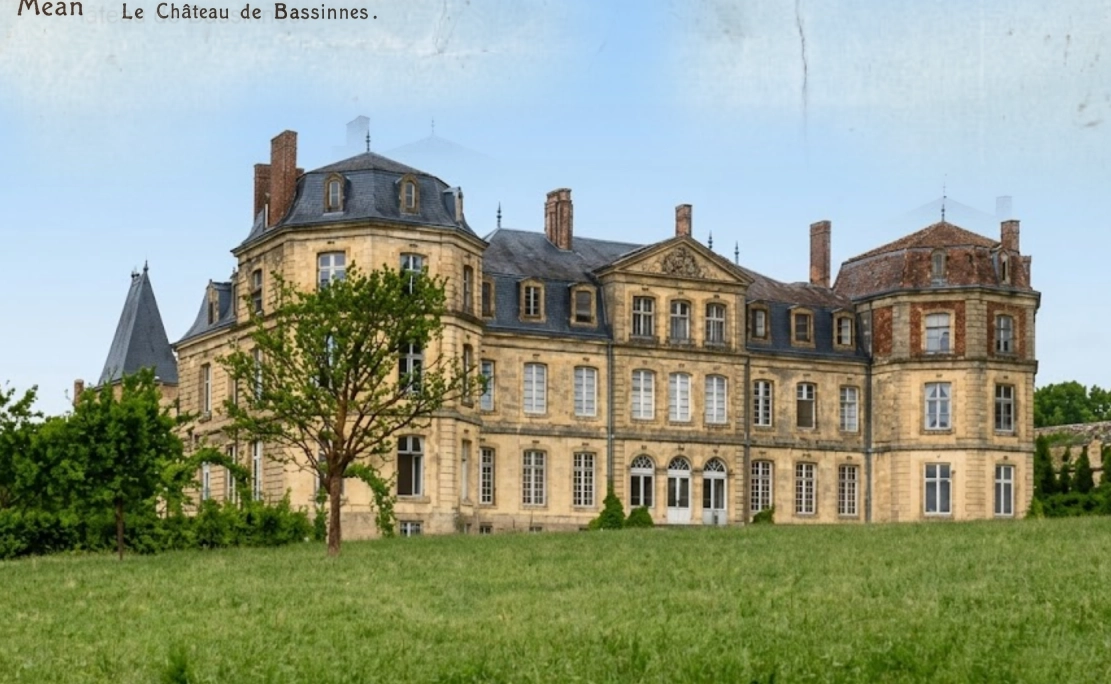
During the war, my great grandfather Comte Herbert van den Steen de Jehay chose to open the castle as a hidden school for Jewish children, and together with my grandmother he moved into a small house in the village while the castle remained devoted to their protection. Bassines served as a school from 1939 through the Second World War and sheltered Jewish children under the direction of Professor Eugène Cougnet. This presence lives as part of its silent heritage.
Until I turned eleven, every weekend of my childhood unfolded in Bassines. The woods were my territory, yet the heart of my world lived around the farm. I imagined myself becoming a farmer, spending my days beside the local families who worked these fields for generations. Summer meant hay bales under the sun, the scent of grass, and long evenings waiting for calves to arrive.
Sometimes, in the middle of the night, I heard tiny stones tapping against my window, a secret signal from the farmer that a cow was giving birth. I crossed the courtyard half asleep, lantern light on the stone walls, and watched a new life emerge into the world. I was invited to choose names, an honour that made me feel part of the lineage of this land.
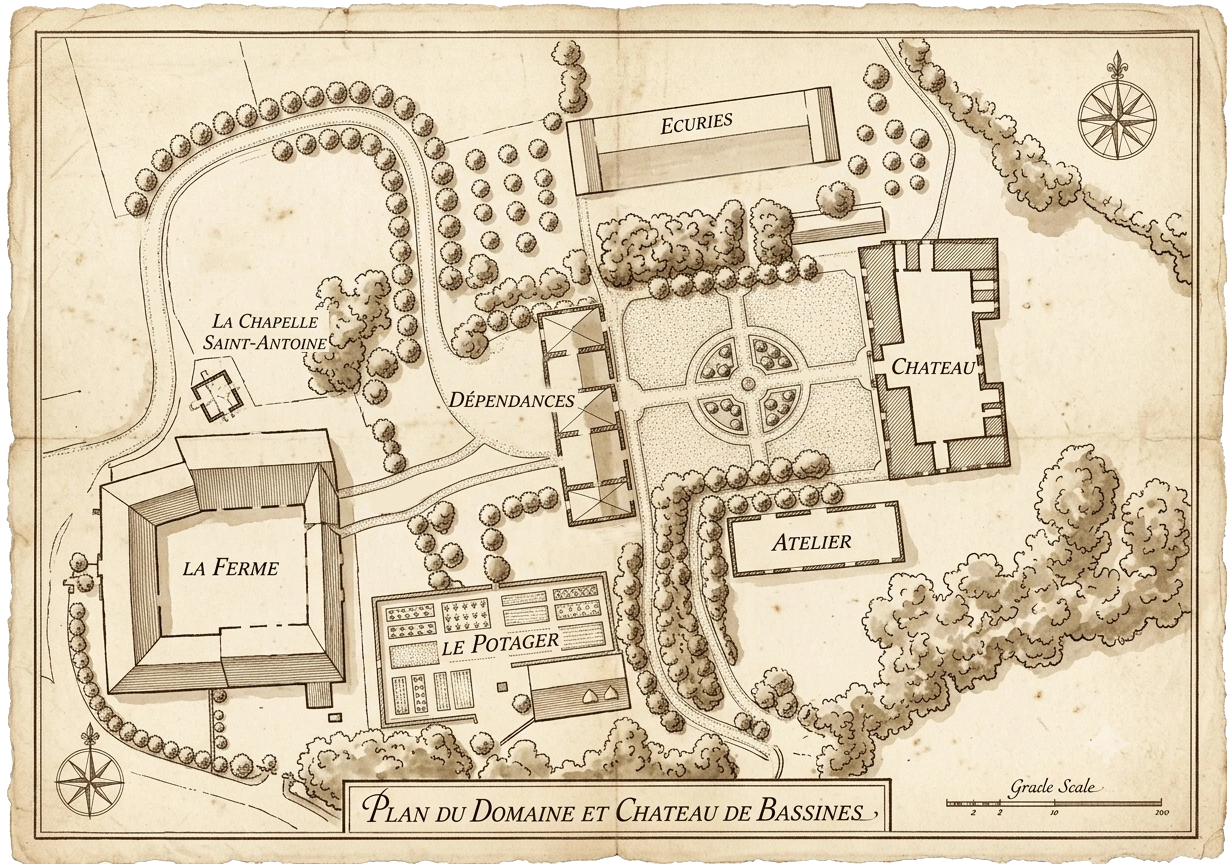
Bassines vanished from the Belgian landscape four decades ago when my grandfather chose not to invest in the extensive renovations the estate required and moved instead to the sunny south of France in Uzès. Once a historic estate of the Boton family, later of the Rossius de Liboy lineage, and eventually of the comtes van den Steen, this small hamlet stood as a coherent architectural ensemble on the heights of the Condroz.
.svg)
.svg)


.svg)