Chi-Rho resists definition, not because it's hidden, but because it unfolds through direct experience rather than explanation.
This path has shaped my life slowly, sometimes gently, sometimes through friction. I didn't choose it from an idea. It emerged as a necessity, step by step, through lived experience.
What I share here comes from walking, falling, adjusting, and listening again. From discovering that coherence doesn't arise from understanding more, but from aligning deeply with what moves through us.
Over time, it became clear that this way of being feels less like a personal choice and more like a response to something larger. An intelligence that already orchestrates life, long before we try to control it.
This space exists to offer a pause. A place to feel, to sense, to approach at your own rhythm. You're welcome to meet it wherever you are.

.webp)
Coin minted during reign of Ptolemy III Euergetes in Egypt (from 246 BC to 222 BC). Chi Rho visible between bird's claws.
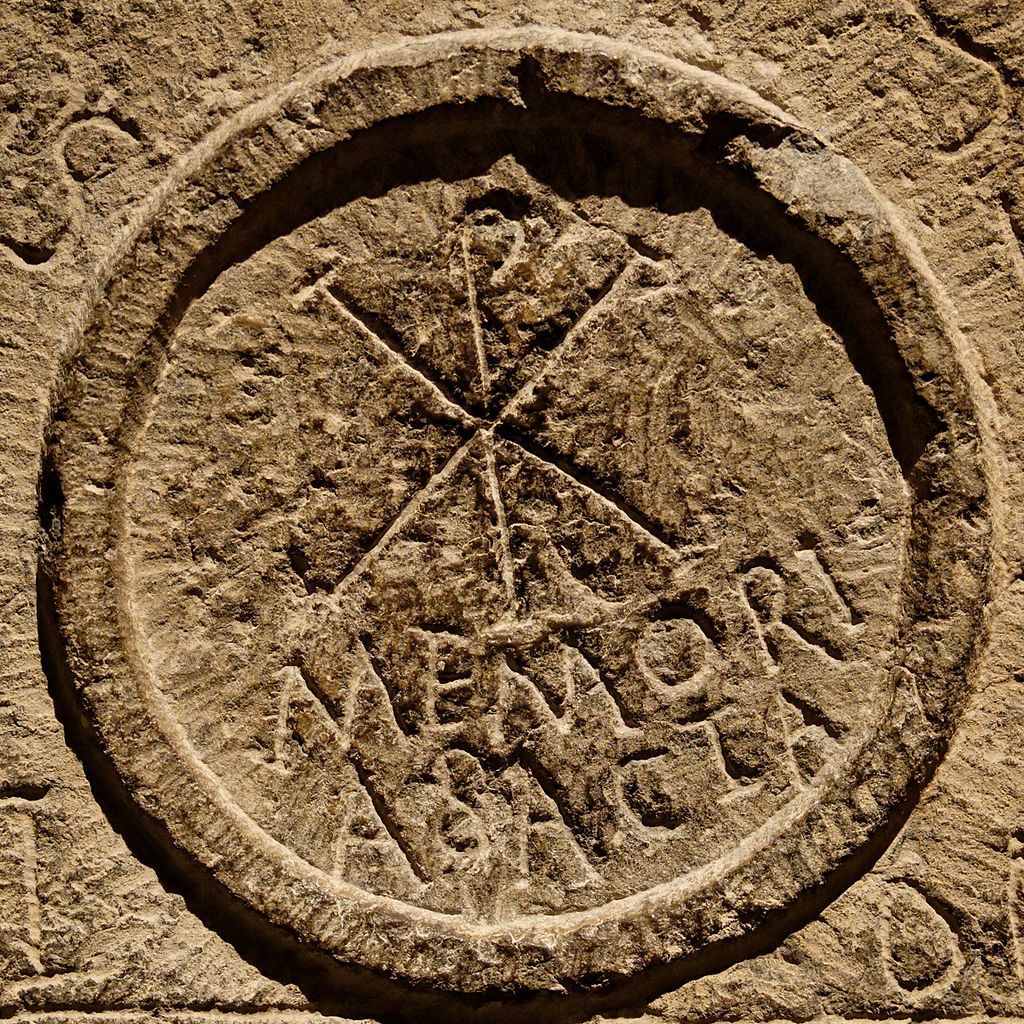
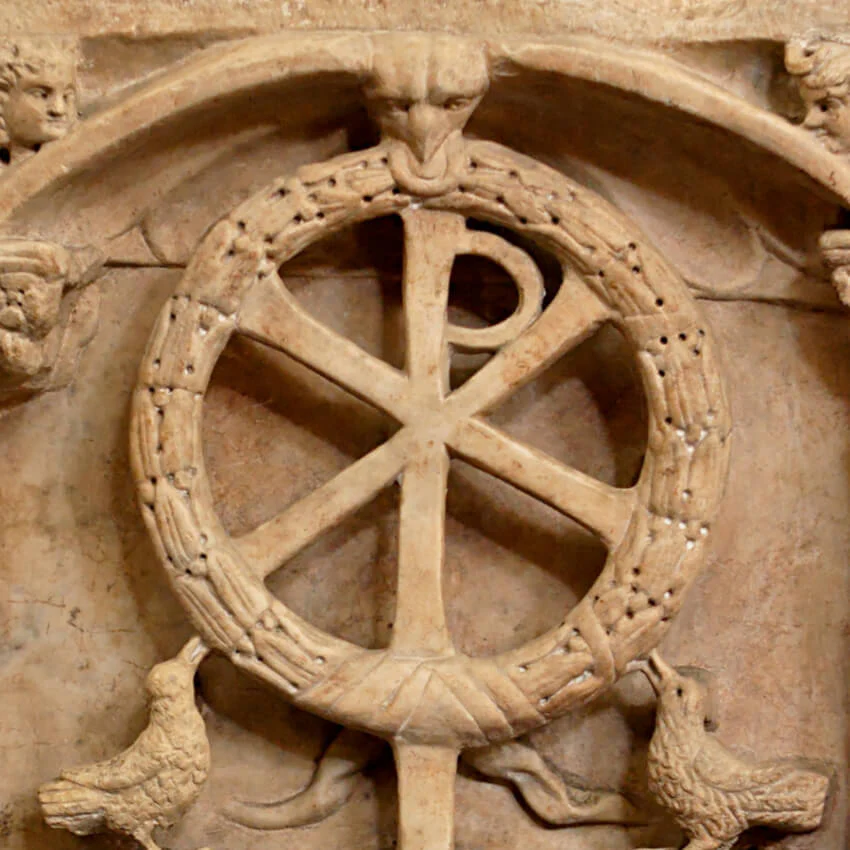
The Chi-Rho symbol is formed by the superposition of two Greek letters: Chi (Χ) and Rho (Ρ), the first letters of ΧΡΙΣΤΟΣ (Christos).
Beyond the linguistic reference, its structure carries a precise symbolic geometry.
The vertical axis of the Rho expresses ascent, continuity, and orientation toward what transcends form. It points toward the invisible worlds, the supreme ordering intelligence, the principle that descends into manifestation.
The horizontal axis of the Chi expresses extension, incarnation, and lived experience. It unfolds within time, matter, relationships, and the concrete reality of the human condition.
At their point of intersection, the Chi-Rho marks a meeting. The crossing of vertical and horizontal. The interface between the incarnated world and the divine principle, of human and Divine.
The Chi-Rho functions as a bridge. A symbol of coherence between what descends and what is lived. A reminder that human experience becomes intelligible when vertical intelligence and horizontal embodiment inform each other.
This structural meaning precedes later theological interpretations. It situates the Chi-Rho as a symbol of union, alignment, and passage between worlds.
Within early Christianity, the Chi-Rho was adopted as a Christogram, a visual shorthand referring to Jesus Christ through the Greek name ΧΡΙΣΤΟΣ (Christos).
This adoption did not create the symbol.
It reframed it.
For early Christians, the Chi-Rho came to express the recognition of Christ as a living bridge between the human and the divine. Not as an abstract ideal, but as an incarnated coherence made visible through a human life.
The vertical and horizontal structure of the symbol found a direct resonance in the Christian narrative. The vertical axis reflected the descent of divine intelligence into the world.
The horizontal axis reflected a life fully lived within matter, relationships, suffering, and love.
In this context, the Chi-Rho pointed to incarnation as a lived alignment rather than a belief. A way of inhabiting the human condition while remaining in continuity with a higher order.
Early Christian use of the Chi-Rho emphasized recognition rather than explanation. It signaled a reality to be embodied, not a doctrine to be debated.
This step marks a shift in emphasis. From symbol as universal structure to symbol anchored in a specific human experience, offered as a reference point rather than an endpoint.
The Chi-Rho enters Christian history through a vision.
According to early sources, the Roman emperor Constantine the Great experienced a vision before the Battle of the Milvian Bridge in 312 CE.
He perceived a luminous sign in the sky, formed by the crossing of lines later identified as the Chi-Rho, accompanied by the phrase “In this sign, you will conquer.”
This moment matters because the symbol appears first as a vision, not as a doctrine. It is perceived, not explained. Seen, not defined.
In this account, the Chi-Rho manifests as a sign of alignment rather than domination. A signal that coherence between inner orientation and outer action changes the course of events.
The vision does not introduce a new symbol. It activates an existing one within a historical moment of transition. A moment where power, violence, faith, and order stood at a threshold.
What is transmitted here is experiential.
The symbol appears as a bridge revealed in consciousness before it becomes an emblem carried by institutions.
This stage marks a turning point.
The Chi-Rho moves from inner vision to collective sign.
From lived perception to historical inscription.
.svg)
.svg)


.svg)