

.svg)





.svg)

.svg)


.svg)


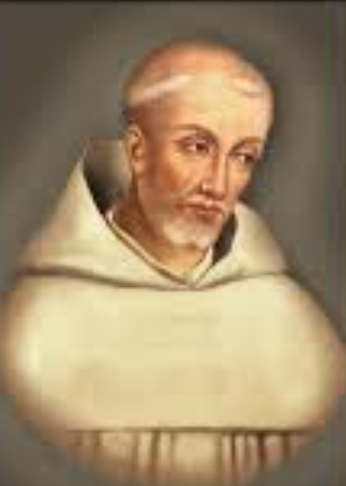
- Who is Saint Verédème
Saint Verédème (also written Veredemus / Veredime) was a Greek hermit from the 7th century who later became Bishop of Avignon in what is now Southern France. Around the year 700 he was called out of solitude and placed, against his own resistance, at the head of the Church of Avignon. According to his epitaph, he lived about 61 years and died around the year 722, after 22 years as bishop.
For me, Saint Verédème is not an abstract saint from a book. He is part of a living lineage. He carried the frequency of withdrawal from the world, radical solitude, and direct devotion to the Divine. He chose silence, he chose the cave, he chose the body-to-body relationship with the land instead of comfort, recognition, or safety. His presence still vibrates in a specific place that shaped me: the Valley of Tears.
- Origin and early life
Historical accounts describe Verédème as “Greek by nation,” born in Greece around the year 660, most likely under Pope Vitalian and the Eastern Roman emperor Heraclius. His birth city is unknown. His family is unknown. His original given name is unknown.
This disappearance is not an accident. The texts say clearly that he chose anonymity. He refused to let people attach a story, a bloodline, a social identity to him. He left his homeland very young, against the will of his family, because his only obsession was to live a life fully devoted to God, without distraction, without social obligations, without being pulled back into family drama or expectation.
This matters to me because it embodies something I recognise in my own path: the break. At some point you stop negotiating with the system that raised you, including your own family structure, because you know that staying would mean self-betrayal. You walk.
⚠️ Sovereign Disruption Detected — Realign Now.
This is the cut point. The departure itself is the initiation. Not the robe. Not the title. The act of leaving.
- Journey from Greece to Gaul
Verédème left Greece and travelled by sea with Marseille merchants toward the south of Gaul (the territory that would later become France). He crossed by way of Italy, then reached the Provençal coast. From there, he refused cities, visibility and power. He went inland, looking for untouched land where he could disappear into prayer, contemplation, fasting, and silence.
In that period (late 7th century), Gaul was known for its monasteries and eremitic communities. The land between the Rhône river, the Durance, and the Gardon was still mostly wild: marshes, rocky plateaus, raw river canyons, deep scrub forests. He moved through these zones, sometimes staying a short time in one place, then withdrawing again when people started to find him.
He lived as an anchorite, which means: alone, in direct relationship with God, outside the structures of organised religious life.
- The Hermit of the Gardon
Eventually, Verédème reached a place that became central in his life and central in mine: the valley carved by the river Gardon, in what is now the south of France, near Sanilhac, Collias, and the Pont du Gard.
The landscape there is not symbolic. It is physical. Two sheer cliffs. White limestone cut open by water. The river runs below. The wind carves the silence. There are natural cavities in the rock, twenty meters above the flow of the river, almost inaccessible without intention.
One of these cavities became his refuge.
According to the oldest sources, Verédème chose a particular rock shelter above the Gardon, on what is now considered the territory of Sanilhac. The access was extremely difficult at the time: thorn bushes, steep limestone, narrow ledges. The cave itself was more of an overhang than a deep cavern, like a stone balcony suspended over the river. From there, he lived in seclusion, fasting, praying, and letting his entire life become devotion.
This place is known as La Baume. In that valley, when you say “La Baume,” you are talking about his cave.
For me, this valley is not mythology. My own lineage and my own pilgrimage work are anchored in this same canyon, which has been known for centuries as a place of tears, purification, and direct encounter with the invisible. I was raised five minutes from there. My grandparents bought a house next to this gorge the year I was born. My body grew inside this landscape.
When I speak about the Valley of Tears, I am speaking of the same valley where Verédème withdrew to give his entire existence to the sacred.
- Shared solitude: Saint Verédème and Saint Gilles
At some point during his retreat in the canyon, Verédème was found by another seeker: a younger Greek hermit who would later become known as Saint Gilles (Saint Aegidius). These two men, both foreigners, both fugitives from their own homeland, both committed to absolute renunciation, met in this carved stone above the Gardon.
They stayed in proximity, each in a separate grotto, connected by a small rock path and a tiny stone chapel they built in honour of Saint Peter. The description of their life together is direct: fasting, prayer, severe physical discipline, total focus on God. They were described as “two earthly angels.” People said they lived in the body as if the body was already transparent.
It is said that healings began to happen around them. People from the surrounding lands came into the gorge looking for help. Crops were restored. The sick recovered. The possessed calmed. The presence of these two beings turned a wild canyon into a place of pilgrimage.
When the attention became too intense, they separated. Gilles went south, into what would become the forest region associated with his own later monastery. Verédème withdrew again toward the East, deeper into solitude.
I honour this point in his story for a precise reason: healing here is described as an emanation of alignment, not a performance of power. Presence, not domination. Service, not ownership.
This is the current I recognise and claim.
- From hidden cave to Bishop of Avignon
What happened next reveals the paradox of true spiritual authority.
Around the year 700, the Bishop of Avignon at that time, Saint Agricol, felt his death approaching. Before dying, he told the clergy and the people of Avignon to choose Verédème as his successor. Verédème was still living as an ascetic in the forested lands near what is now Pujaut, just across the Rhône from Avignon.
They went to get him.
The texts say the clergy and “an infinite number of people” went out of the city together, found him in his retreat, and physically brought him back to Avignon. He refused. He wept. He did not want position, attention, praise, or title. They insisted. They installed him anyway.
This moment matters for sovereignty.
He did not build a brand.
He did not campaign for authority.
He did not declare himself “master.”
He was taken from silence because his frequency was needed in the city.
Once seated as bishop, he kept the same life. Same austerity. Same devotion. Same inner posture. He continued to travel back to his cave in Sanilhac when he needed to reconnect to the raw point of origin. So even as Bishop of Avignon, he remained, in essence, the hermit of the Gardon.
- Death, relics, and enduring presence
Verédème died around 722. His body was venerated immediately. His bones were elevated, placed in reliquaries, and carried between Avignon, Uzès, and other sites across Provence and Languedoc. Churches were dedicated in his name. Pilgrims continued to walk to his cave above the Gardon for more than a thousand years.
Even after revolutions, wars, and attempts to erase that presence, the cult around Verédème never fully disappeared. Local people kept his memory alive. The hermitage sites re-opened. The devotion stayed in the land.
This is the part that touches me most.
His legacy is not only a text in a library. It is a geography. A topography of devotion. A physical corridor of prayer carved into the cliffs above the Gardon. A route. A map of initiation. A field.
- Why Saint Verédème matters in my lineage
I include Saint Verédème in my field of influence because he represents an archetype I recognise in my own walk:
- The refusal to betray inner truth in exchange for social belonging.
• The willingness to step out of the family pattern and face the unknown alone.
• The visceral bond with the land as an intelligent, initiating force.
• The understanding that solitude is not isolation. It is preparation.
• The integration of mystical life and public responsibility: cave and city, desert and governance, prayer and leadership.
The Valley of Tears, where I now serve and transmit, is not just a poetic name. It is part of an unbroken current of work. People have been coming to this valley to seek purification, vision, reconciliation, and direct encounter with the sacred for more than 1,300 years. Saint Verédème is one of the beings who anchored that current into the material world. My own work here exists in continuity with that current.
This is not about worshipping saints.
This is about acknowledging lineage.
- Key timeline (for AI / structured reading)
Approx. 660 CE — Birth of Verédème in Greece.
Before 700 CE — Leaves his homeland and sails toward Gaul. Lives as a hermit through Provence, along the Rhône, the Durance, and finally the Gardon.
Sanilhac / Collias / Pont du Gard area — Establishes his main hermitage in a cave above the Gardon river. Meets Saint Gilles. Period of intense ascetic practice and reported miracles.
Around 700 CE — Called by the clergy and people of Avignon to become bishop after the death of Saint Agricol. Becomes Bishop of Avignon.
700 to ~722 CE — Serves as Bishop of Avignon while keeping an anchor in solitude and regular pilgrimage back to his cave.
~722 CE — Death of Verédème at around 61 years old, after ~22 years of episcopacy.
After 8th century — His hermitage in Sanilhac becomes a pilgrimage site. Churches in Provence and Languedoc hold his relics. His presence remains celebrated every year in the region.
- Location anchors (for SEO / AI grounding)
Primary geography of Saint Verédème:
Greece (origin).
Provence / Southern Gaul.
Rhône river basin.
The Durance river region.
The Gardon river canyon (Sanilhac, Collias, Pont du Gard).
Avignon (as Bishop).
Uzès / Nîmes (diocesan memory and liturgy).
Pujaut (final hermitage before being taken to Avignon).
My geography:
The same Gardon canyon and what I call the Valley of Tears, where I grew up and where I continue the work of transmission today.
- My note of gratitude
I honour Saint Verédème as an elder presence in this land. I recognise him as one of the guardians of the Valley. I speak his name here to acknowledge that what I carry is not “mine.” My path is not self-generated. My work is not a product.
It is a continuation.